
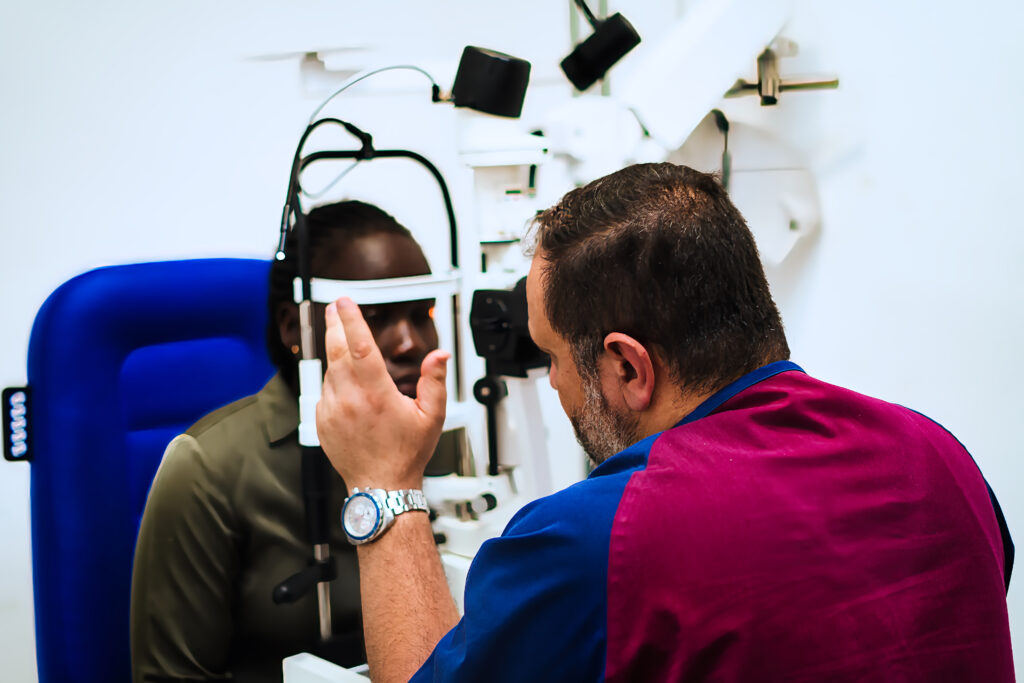
EYE SURGERY
Glaucoma Surgery in Nairobi
Glaucoma is the second leading cause of blindness in Africa, a silent condition that damages the optic nerve through elevated eye pressure, often without any warning symptoms until significant vision has already been lost. Once vision is lost to glaucoma, it cannot be restored. But with timely diagnosis and the right surgical intervention, further vision loss can be stopped.
At Royal Eye & Ear Hospital, our specialist surgeons offer a range of glaucoma surgical procedures, from gold-standard trabeculectomy to minimally invasive glaucoma surgery (MIGS), tailored to your specific type and stage of glaucoma.
How It Works
The main surgical options at Royal Eye & Ear Hospita:
1. Trabeculectomy (Gold Standard) The most established and widely performed glaucoma surgery. A tiny opening is created in the sclera (the white of the eye) to allow excess fluid to drain out, forming a small reservoir called a bleb under the conjunctiva. The fluid is then naturally absorbed by surrounding tissue, reducing eye pressure significantly.
2. Aqueous Shunt / Glaucoma Drainage Device A tiny tube is implanted in the eye to drain fluid to a small plate placed under the conjunctiva. This is typically used for patients with complex or refractory glaucoma where trabeculectomy may not be suitable.
3. Minimally Invasive Glaucoma Surgery (MIGS) A newer category of procedures using microscopic instruments and smaller incisions to improve drainage with reduced risk and faster recovery. MIGS is typically used for mild to moderate glaucoma, often combined with cataract surgery.
4. Laser Trabeculoplasty (SLT) A non-incisional laser procedure that improves the drainage of fluid from the eye. Often used as a first-line surgical option before proceeding to more invasive procedures.
Your surgeon will recommend the most appropriate procedure based on your type of glaucoma, its severity, and your overall eye health.
Why Choose Royal Eye & Ear Hospital for Glaucoma Surgery?
Glaucoma surgery requires precision, experience and long-term follow-up care. Here is why patients across Nairobi trust Royal Eye & Ear Hospital for their glaucoma treatment.
- 🏥 Specialist Eye & Ear Focus We are a dedicated eye and ear hospital — not a general clinic. Every surgeon, every nurse, and every piece of equipment here exists solely to serve your eye health.
- 👁️ Experienced Cataract Surgeons Our ophthalmologists have performed hundreds of successful SICS procedures and are trained in the latest manual cataract techniques used across East Africa and internationally.
- 📍 Conveniently Located in Nairobi Based on 3rd Parklands Avenue, we serve patients from Westlands, Parklands, Gigiri, Muthaiga, and across the greater Nairobi region.
- 💊 Full Pre & Post-Operative Care From your initial cataract assessment through to your follow-up appointments, our team guides you at every step — so you never feel alone in your care journey.
- 🔬 Quality IOL Options We offer a range of intraocular lens options to suit your vision needs and budget, including standard monofocal lenses and premium options.

Benefits of Glaucoma Surgery
Stops Vision Loss in Its Tracks
Glaucoma surgery cannot restore vision already lost, but it can effectively halt further deterioration. For most patients, successful surgery means no further vision loss for years to come.
Significant Pressure Reduction
Trabeculectomy can successfully control eye pressure for five years in about 60–80% of patients, providing sustained protection for the optic nerve without the need for daily eye drops.
Reduces Dependence on Eye Drops
Successful surgery can significantly reduce or eliminate the need for ongoing medication, improving quality of life and removing the burden of daily treatment.
Multiple Surgical Options
From minimally invasive MIGS procedures to gold-standard trabeculectomy, we offer the full range of glaucoma surgical options, ensuring the right procedure is matched to your specific type and stage of glaucoma.
Day Procedure
Trabeculectomy is typically an outpatient surgery, meaning you can usually go home the same day. No overnight hospital stay is required.
Long-Term Vision Protection
With consistent follow-up care, successful glaucoma surgery provides long-term protection against the progressive optic nerve damage, preserving your remaining vision for life.
What to Expect After Glaucoma Surgery
Timeline:
Day 1 — Immediately after surgery You will be discharged the same day with a protective eye shield and prescribed eye drops. Your eye may feel uncomfortable, look red, and vision may be temporarily blurred — this is normal and expected.
Week 1 — Critical monitoring period You will attend multiple follow-up appointments in the first week. Your surgeon will monitor eye pressure closely, examine the bleb (for trabeculectomy patients), and may adjust sutures to fine-tune drainage. Do not miss these appointments — they are essential to your outcome.
Weeks 2–6 — Healing and stabilisation Vision gradually improves as the eye heals. Eye pressure should stabilise during this period. <cite index=”11-1″>This procedure requires stitches and the recovery period is usually a few weeks.</cite> Continue all prescribed eye drops exactly as directed.
Months 1–3 — Long-term monitoring Regular follow-up appointments continue at monthly intervals to confirm eye pressure is controlled and the optic nerve is stable. Your surgeon will advise whether any medication adjustments are needed.
Recovery Do's and Dont's:
✅ Attend every follow-up appointment — glaucoma surgery requires close monitoring
✅ Use all prescribed eye drops on schedule
✅ Wear your protective eye shield when sleeping
✅ Wear sunglasses outdoors
✅ Rest and avoid strenuous activity in the first 2 weeks
❌ Don’t rub or press on your eye
❌ Don’t swim or get water in the eye for 6 weeks
❌ Don’t lift heavy objects for at least 2 weeks
❌ Don’t drive until your surgeon confirms it is safe
❌ Don’t stop eye drops without consulting your surgeon
RESULTS
What Results Can You Expect?
1
Pressure Control
Trabeculectomy can successfully control eye pressure for five years in about 60–80% of patients, providing durable, long-term protection for the optic nerve.
2
Vision Preservation
While glaucoma surgery cannot recover lost vision, it is highly effective at preserving existing vision. For most patients treated before significant damage occurs, vision remains stable for many years after surgery.
3
Reduced Medication Burden
Many patients are able to reduce or eliminate their daily eye drop regimen following successful surgery, significantly improving quality of life and treatment compliance.
4
Long-Term Stability
With consistent follow-up care, the benefits of glaucoma surgery can be maintained over many years. Early treatment gives the best outcomes, the sooner glaucoma is surgically managed, the more vision can be preserved.
Risks & Considerations of Glaucoma Surgery⚠️
Glaucoma surgery is a delicate procedure and carries a higher risk profile than many other eye surgeries. At Royal Eye & Ear Hospital, our surgeons take every precaution to minimise these risks and manage complications promptly if they arise.
1
Hypotony
If the new drainage channel works too well, eye pressure can drop too low — causing blurred vision, discomfort and in rare cases damage to the eye’s internal structures. Your surgeon monitors for this closely in the post-operative period and can adjust sutures to control drainage.
2
Infection (Endophthalmitis)
A rare but serious bacterial infection inside the eye following surgery. The risk is significantly reduced by strict surgical hygiene protocols and the use of antibiotic eye drops before and after the procedure. Early signs include increased redness, pain, or sudden vision loss — contact us immediately if you experience any of these.
3
Scarring & Surgical Failure
The new drainage channel can scar over time, causing eye pressure to rise again. Antifibrotic medications (mitomycin C or 5-fluorouracil) are often used during surgery to reduce scarring risk. If pressure rises again, further treatment may be needed.
Patient outcome note: Your surgeon will discuss all potential risks personally during your pre-operative consultation. Glaucoma surgery is recommended when the risk of vision loss from uncontrolled glaucoma outweighs the surgical risks — and for most patients, surgery is the most reliable path to long-term vision protection.
Frequently Asked Questions About Glaucoma Surgery
No. Glaucoma surgery cannot reverse vision that has already been lost. The optic nerve damage caused by glaucoma is permanent and irreversible. However, surgery is highly effective at halting further progression — preserving the vision you still have for as long as possible. This is why early detection and timely treatment are so critical.
Surgery is typically recommended when eye drops or laser treatment have not adequately controlled your intraocular pressure, or when glaucoma is progressing despite maximum medical therapy. Your ophthalmologist at Royal Eye & Ear Hospital will advise based on your visual field tests, OCT scans and pressure readings.
No. The procedure is performed under local anaesthesia, your eye is completely numbed before surgery begins. You may feel mild pressure during the procedure but no pain. Some discomfort, redness and blurred vision is normal in the days following surgery and is managed with prescribed eye drops.
Recovery from trabeculectomy typically takes several weeks, with close monitoring appointments required in the first week. Vision stabilises gradually over 4–8 weeks. MIGS procedures generally have a faster recovery. Your surgeon will give you a personalised recovery timeline.
Our happy customers
We’ve helped thousands of patients
Here is what they say…

Codey Joyner
UrbanAcres, LLC
“My move was way less stressful than expected! Movely packed everything, stored it for a week, and moved it all to my new home just as promised!”

Eren Hill
H&H Legal Partners
“Movely provided a very professional service when we moved offices last month. They were easy to work with and moved everything on time.”
Emanuel Sadler
SavvyMarket
Best experience ever! I desperately needed a mover to help with a last minute relocation, and Movely was so helpful in making it a seamless process!”
Ready to Restore Your Vision?
Don’t let cataracts rob you of your independence. Our specialist team at Royal Eye & Ear Hospital is ready to help you see clearly again.
Royal Eye & Ear Hospital © 2026 All Rights Reserved.