
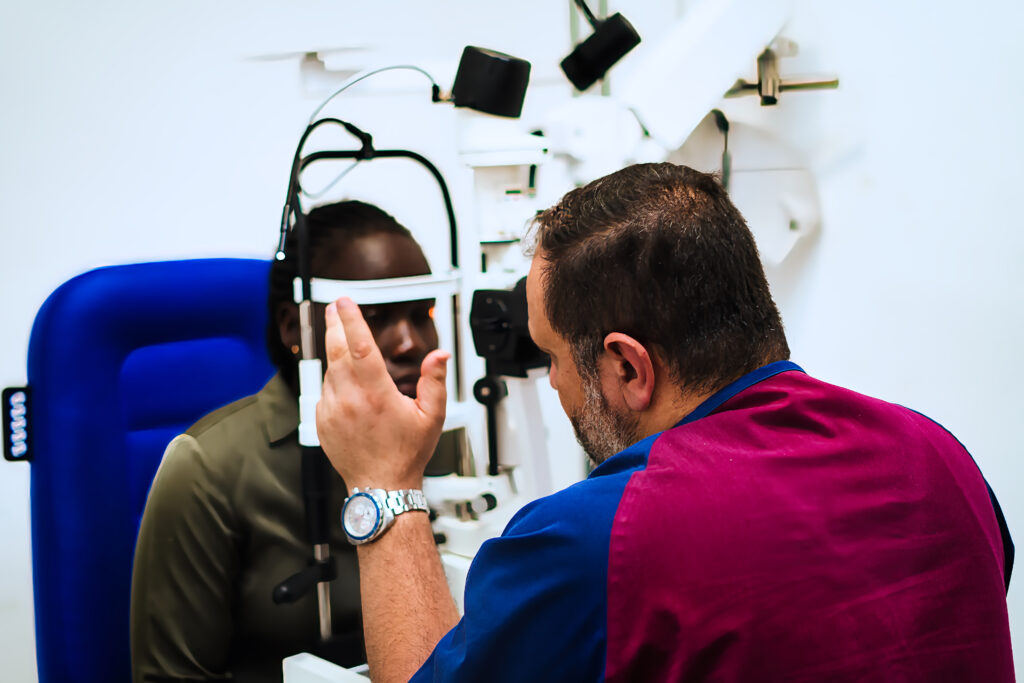
EYE SURGERY
Intravitreal Injections
If you have been diagnosed with age-related macular degeneration, diabetic retinopathy, retinal vein occlusion or macular oedema, intravitreal injections may be the most important treatment available to preserve your vision. These conditions affect the retina, the light-sensitive layer at the back of the eye, and without treatment they can cause rapid, severe and permanent vision loss.
Intravitreal injections deliver medication directly into the vitreous gel inside the eye, placing a high concentration of the therapeutic agent precisely where it is needed, at the retina, while minimising absorption into the rest of the body. Intravitreal drug delivery has become the gold standard treatment for many retinal diseases, with anti-VEGF agents now the first-line therapy for treating and stabilising most cases of wet age-related macular degeneration, diabetic macular oedema and retinal vein occlusion.
What Are Intravitreal Injections?
An intravitreal injection is a procedure in which medication is injected directly into the vitreous humour, the clear gel-like substance that fills the inside of the eye behind the lens. This route of drug delivery bypasses the blood-ocular barrier, allowing the medication to reach the retina at concentrations far higher than could be achieved with eye drops or tablets, while minimising systemic side effects.
The actual injection takes only a few seconds and is administered through the white part of the eye (the sclera) using a very fine needle. Anaesthetic eye drops ensure the procedure is comfortable. Most patients are surprised at how straightforward and well-tolerated the procedure is.
How It Works
Intravitreal Injections involve Four precise steps:
- Preparation: You sit or lie in a comfortable position. The area around your eye is cleaned thoroughly with antiseptic solution. A sterile drape is placed around the eye to maintain a clean field.
- Anaesthesia: Anaesthetic eye drops are applied to numb the surface of the eye completely. The injection itself takes only a few seconds and most patients feel only mild pressure, if anything at all.
- The injection: Using a very fine needle, the medication is injected through the white of the eye (sclera) into the vitreous cavity. The entire injection takes a few seconds.
- Post-injection care: Antibiotic eye drops are applied. Your vision and eye pressure are briefly checked. You rest for a short period before being discharged with instructions and follow-up arrangements.
The whole appointment, including preparation, the injection and post-procedure observation, typically takes 20-30 minutes. The injection itself takes only a few seconds.
Why Choose Royal Eye & Ear Hospital for Intravitreal Injections?
Intravitreal injections are an intraocular procedure and must be performed under strict sterile conditions by an experienced ophthalmic team. Here is why patients across Nairobi trust Royal Eye & Ear Hospital for this sight-saving treatment.
- 🏥 Specialist Eye & Ear Focus We are a dedicated eye and ear hospital — not a general clinic. Every surgeon, every nurse, and every piece of equipment here exists solely to serve your eye health.
- 👁️ Experienced Cataract Surgeons Our ophthalmologists have performed hundreds of successful procedures and are trained in the latest manual cataract techniques used across East Africa and internationally.
- 📍 Conveniently Located in Nairobi Based on 3rd Parklands Avenue, we serve patients from Westlands, Parklands, Gigiri, Muthaiga, and across the greater Nairobi region.
- 💊 Full Pre & Post-Operative Care From your initial cataract assessment through to your follow-up appointments, our team guides you at every step — so you never feel alone in your care journey.
- 🔬 Before any injection, a detailed retinal examination including optical coherence tomography (OCT) and fundus imaging is performed to confirm the indication, plan treatment and establish a baseline for monitoring response.

Benefits of Intravitreal Injections
Gold Standard Treatment
- Intravitreal drug delivery has become the gold standard treatment for many retinal diseases. Anti-VEGF agents are now the first-line therapy for wet AMD, diabetic macular oedema and retinal vein occlusion, supported by decades of clinical trial evidence.
Directly Targets the Retina
The primary benefit of intravitreal injection is the targeting of the therapeutic agent in the eye while minimising systemic absorption. By delivering medication directly to the retina, concentrations many times higher than achievable with tablets or drops are reached at the exact site of disease.
Improve Vision
- For conditions such as wet AMD and diabetic macular oedema, anti-VEGF injections have been shown to not only halt vision loss but also produce meaningful vision improvement in a significant proportion of patients when started early and maintained consistently.
Quick Outpatient Procedure
- The injection itself takes only a few seconds. The total appointment, including preparation and post-procedure observation, takes 20-30 minutes. You return to normal activities the same day.
Well-Tolerated
- Most patients are surprised at how comfortable the procedure is. With good anaesthetic drops and technique, the injection is typically felt as only mild pressure, if anything. Serious complications are uncommon when performed under proper sterile conditions.
Minimal Side Effects
Because medication is delivered directly into the eye, systemic drug exposure is minimal compared to oral or intravenous administration, reducing the risk of side effects affecting the rest of the body.
What to Expect After an Intravitreal Injection
Timeline:
Immediately after: You may notice floaters or a shadow in your vision caused by the injection fluid and small air bubbles. This is completely normal and settles within a few hours to a day.
First 24-48 hours: The eye may feel mildly gritty, sore or irritated. The white of the eye may appear red from a small surface haemorrhage at the injection site. This is harmless and resolves within one to two weeks without treatment.
Days 2-7: Any mild discomfort settles. Use prescribed antibiotic eye drops as directed. Vision may fluctuate slightly as the medication disperses through the vitreous gel and begins to take effect at the retina.
Weeks 2-4: OCT imaging at your follow-up appointment assesses treatment response, checking whether macular swelling has reduced and disease activity has improved. This guides the decision on whether to proceed with the next injection.
Long-term: Retinal conditions requiring intravitreal injections are typically chronic and require ongoing treatment. Most patients require monthly injections initially, with frequency gradually reduced as the condition is controlled. Never miss a follow-up appointment, as disease can reactivate silently between injections.
Recovery Do's and Dont's:
✅ Use prescribed antibiotic eye drops for the days following each injection
✅Report any sudden vision loss, severe pain or marked increase in redness immediately
✅ Do attend all follow-up appointments
✅ Do wear sunglasses outdoors
❌ Don’t rub or press on your eye
❌ Don’t swim or get water in the eye for 4 weeks
❌ Don’t drive until your surgeon confirms your vision is adequate
❌ Don’t skip your medication even if the eye feels fine
RESULTS
What Results Can You Expect?
1
Vision Preservation
The primary goal of intravitreal injection therapy is to preserve the vision you have by halting the disease process causing retinal damage. For conditions such as wet AMD and diabetic macular oedema, consistent treatment prevents the severe vision loss that would otherwise occur without treatment.
2
Clearer Vision
- Many patients with wet AMD and diabetic macular oedema experience meaningful vision improvement with anti-VEGF therapy, particularly when treatment is started early and maintained consistently. Clinical trials have demonstrated significant visual acuity gains in a substantial proportion of treated patients.
3
Reduction in Macular Swelling
OCT imaging reliably demonstrates reduction in macular thickness and swelling in most patients responding to anti-VEGF treatment, confirming the anatomical benefit of therapy even before visual improvement is noticeable.
4
Long-Term Stability
- With sustained treatment and monitoring, many patients achieve long-term disease stability, maintaining functional vision for years. The frequency of injections typically reduces over time as the disease is brought under control.
Risks & Considerations of Intravitreal Injections⚠️
Intravitreal injections have an excellent safety profile when performed under proper sterile conditions by an experienced team. Serious complications are uncommon but important to be aware of.
1
Subconjunctival Haemorrhage:
- A common and harmless finding after intravitreal injection. A small red patch appears on the white of the eye at the injection site. It looks alarming but is completely benign and resolves on its own within one to two weeks without treatment.
2
Infection (Endophthalmitis)
- The most serious but fortunately rare complication of intravitreal injection. Reported in approximately 1 in 1,000 to 1 in 5,000 injections. Strict aseptic technique dramatically reduces this risk. Symptoms include sudden severe vision loss, marked pain and increased redness after the injection. This requires immediate emergency treatment.
3
Retinal Detachment
A very rare complication associated with intraocular procedures. Symptoms include sudden flashes, new floaters or a curtain across the vision. This requires immediate assessment.
Patient outcome note:
Your specialist will discuss all risks clearly before your first injection and will obtain informed consent before each treatment session. For patients with sight-threatening retinal disease, the risk of the injection is far outweighed by the risk of leaving the condition untreated.
Frequently Asked Questions About Intravitreal Injections
Most patients are surprised at how comfortable the procedure is. Anaesthetic eye drops completely numb the surface of the eye. The injection itself is felt as mild pressure at most, and takes only a few seconds. Some patients report mild grittiness or soreness in the hours after the injection, which is managed with simple pain relief.
This depends entirely on your specific condition and how it responds to treatment. Most conditions are treated with a loading phase of three to four monthly injections, followed by maintenance injections at intervals guided by your OCT response. Some patients require regular injections for years. Your specialist will discuss a realistic treatment plan at your initial consultation.
The primary goal of intravitreal injection therapy is to preserve vision by halting disease progression, not necessarily to improve it. However, many patients with wet AMD and diabetic macular oedema do experience meaningful vision improvement with consistent treatment, particularly when started early. Your specialist will set realistic expectations based on your specific condition and degree of retinal damage already present.
Your response to intravitreal injection therapy is monitored at each follow-up appointment using optical coherence tomography (OCT), which provides a detailed cross-sectional image of the retina. Your specialist will compare your OCT images over time to determine whether macular swelling is reducing, whether disease activity is controlled and whether your injection frequency needs to be adjusted.
Our happy customers
We’ve helped thousands of patients
Here is what they say…

Codey Joyner
UrbanAcres, LLC
“My move was way less stressful than expected! Movely packed everything, stored it for a week, and moved it all to my new home just as promised!”

Eren Hill
H&H Legal Partners
“Movely provided a very professional service when we moved offices last month. They were easy to work with and moved everything on time.”
Emanuel Sadler
SavvyMarket
Best experience ever! I desperately needed a mover to help with a last minute relocation, and Movely was so helpful in making it a seamless process!”
Ready to Restore Your Vision?
Don’t let cataracts rob you of your independence. Our specialist team at Royal Eye & Ear Hospital is ready to help you see clearly again.
Royal Eye & Ear Hospital © 2026 All Rights Reserved.