
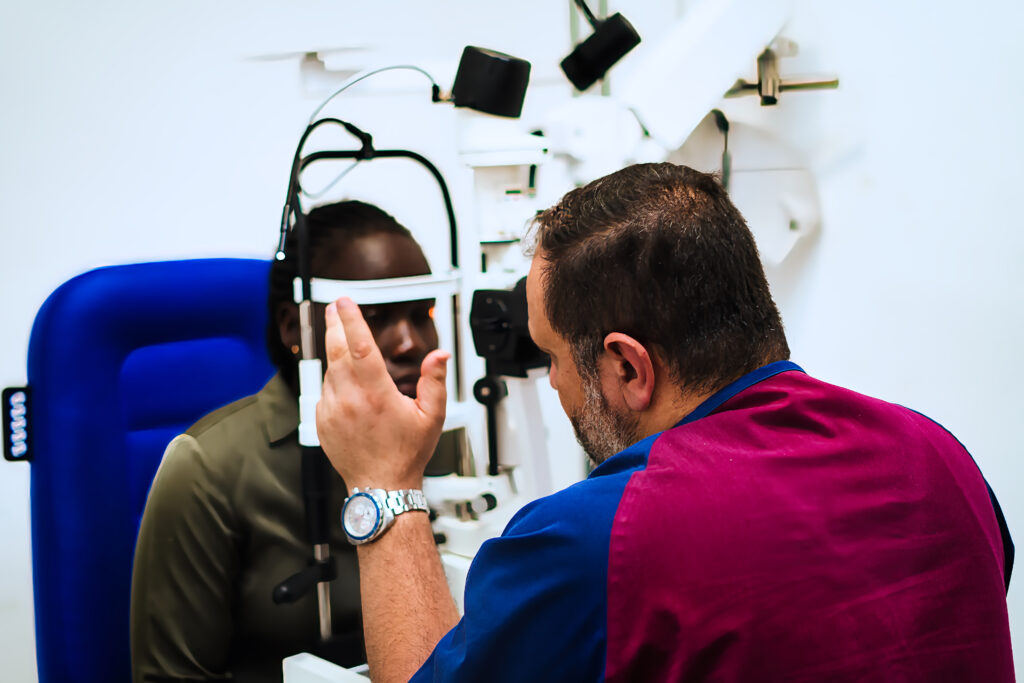
ENT SURGERY
Tympanoplasty
Your eardrum is a thin, delicate layer of tissue that sits between your ear canal and middle ear. It vibrates when sound hits it, which moves the tiny hearing bones right behind it. When your eardrum gets a hole or tear from an infection, injury, or pressure changes, it can’t vibrate the way it needs to. Your hearing drops, ear infections keep coming back, and dealing with constant fluid drainage can quickly become a daily headache.
A tympanoplasty fixes this issue by repairing the hole. The surgeon places a small tissue graft right over the tear, giving your eardrum a solid foundation so it can naturally grow back and close up entirely. Studies show that this repair works beautifully for about 90% of people. At Royal Eye & Ear Hospital, our ENT specialist performs this eardrum repair using highly precise microsurgery techniques, combined with the dedicated recovery care you need to make sure the patch heals permanently.
How It Works
Tympanoplasty involves these precise steps:
- 1.Anaesthesia — General anaesthesia. You are completely asleep throughout.
- 2.Surgical access — Either through the ear canal or via a small incision behind the ear, depending on perforation size and location.
- 3.Graft harvesting — A small piece of temporalis fascia or tragal cartilage is taken from the patient.
- 4.Graft placement — The eardrum edges are lifted under microscope magnification. The graft is positioned precisely over or under the perforation. Foam packing holds it in place while healing begins.
- 5.Ossicular reconstruction — For Type II-V, damaged hearing bones are assessed and rebuilt using tissue, cartilage or prosthetic replacements.
- 6.Closure — Ear canal packing placed. Skin incision closed if applicable. No visible external scars.
The procedure takes 30 minutes to 2 hours depending on type and complexity.
Why Choose Royal Eye & Ear Hospital for Tympanoplasty?
Not all cataract surgeries are equal. The skill of your surgeon, the quality of the lens, and the care you receive after surgery all determine your outcome.
- 🏥 Dedicated Eye & Ear Specialists. We are a specialist eye and ear hospital. Ear surgery is a core part of what we do.
- 👁️ Experienced ENT Surgeons. Dr. Mohamed Arab has two decades of tympanoplasty, myringoplasty and middle ear surgery experience across Egypt, Somalia and Kenya.
- 📍 Conveniently Located in Nairobi Based on 3rd Parklands Avenue, we serve patients from Westlands, Parklands, Gigiri, Muthaiga, and across the greater Nairobi region.
- 💊 Combined Procedures Available. Tympanoplasty is frequently combined with mastoidectomy or ossicular chain reconstruction. All necessary procedures can be performed in a single anaesthetic episode.
- 🔬 Operating Microscope Technique. All tympanoplasty at Royal Eye & Ear Hospital is performed under operating microscope magnification.

Benefits of Tympanoplasty
Closes the Perforation Permanently
The primary goal of tympanoplasty is permanent closure of the eardrum hole. A closed eardrum vibrates normally and protects the middle ear from bacteria and debris.
Improves Hearing
A perforated eardrum cannot vibrate efficiently — causing conductive hearing loss. Closing the perforation restores vibration and improves hearing, particularly at low and mid frequencies.
Stops Recurring Ear Infections
The eardrum is a barrier against bacteria. A hole gives bacteria direct access to the middle ear. Closing it dramatically reduces infection frequency and antibiotic dependency.
Prevents Progressive Middle Ear Damage
Long-standing perforations with repeated infections progressively damage the ossicular chain. Early repair prevents this deterioration and preserves the hearing and anatomy that remain.
Allows Normal Water Exposure
Patients with perforations must keep their ears dry at all times. After successful tympanoplasty, swimming and bathing without ear protection becomes possible again.
High Success Rate
Studies show tympanoplasty successfully treats 90% of people — one of the most reliably effective procedures in ENT surgery.
What to Expect After Tympanoplasty
Timeline:
Day 1-3
The ear feels blocked and muffled — normal due to packing and swelling. Hearing is reduced in the operated ear. The area may be sore. Rest at home, keep the ear dry and take all prescribed medications as directed.
Days 3-14
Mild discomfort, ear fullness and some bloody or watery discharge around the packing are all normal. Outer packing is removed at the first post-operative appointment. Keep the ear dry. Do not blow your nose.
Weeks 2-6
Ear canal clears as the internal gelatin packing dissolves. Hearing begins to improve as packing absorbs and the graft beds in. Most patients with desk-based work return within one to two weeks.
Weeks 6-12
Eardrum examined to confirm graft take. Audiometry performed to document hearing improvement. Full hearing benefit typically established by this point.
Long-term
Avoid inserting objects into the ear. Use ear plugs for swimming in the early months after surgery. Report any recurrence of ear discharge immediately.
Recovery Do's and Dont's:
✅ Keep the ear completely dry at all times during recovery.
✅ Use cotton wool with Vaseline in the ear opening when showering.
✅ Take all prescribed antibiotic ear drops and pain relief as directed.
✅ Rest and avoid strenuous activity for at least four weeks.
✅ Attend every post-operative appointment for packing. removal and graft check
✅ Report sudden increase in pain, fever or hearing worsening immediately.
❌ Do not let water enter the ear canal — no swimming until surgeon confirms healing.
❌ Do not blow your nose — sneeze with mouth open if needed.
❌ Do not insert anything into the ear canal.
❌ Do not fly for at least two to four weeks unless cleared by your surgeon.
❌ Do not do strenuous exercise or heavy lifting for four weeks.
RESULTS
What Results Can You Expect?
1
High Rate of Successful Eardrum Closure
Tympanoplasty fixes the eardrum for 90% of people. Success means the hole is closed permanently, the eardrum works again, and your middle ear is protected from future infections
2
Meaningful Hearing Improvement
Closing the perforation restores eardrum vibration. Conductive hearing loss improves particularly at low and mid frequencies. Patients with combined ossicular reconstruction achieve the greatest hearing gains.
3
End of Infections and Discharge
Years of recurring ear infections and chronic discharge typically end after successful tympanoplasty. This is one of the most personally significant outcomes for many patients.
4
Freedom from Water Precautions
Once the eardrum is confirmed healed, swimming and normal water exposure resume without restriction.
Risks & Considerations of Tympanoplasty⚠️
Like all surgical procedures, Tympanoplasty carries a small risk of complications. At Royal Eye & Ear Hospital, our surgeons take every precaution to minimize these risks — and serious complications are rare.
1
Graft Failure
The most common complication. The graft may not take, leaving the eardrum still perforated. More likely if the ear was infected at surgery, if the patient smokes or if water precautions are not followed. Repeat tympanoplasty can be considered once the ear has settled.
2
Infection and Poor Wound Healing
Small risk with any ear surgery. Antibiotic drops, water precautions and follow-up attendance significantly reduce this risk.
3
Tinnitus and Dizziness
Temporary tinnitus or dizziness can occur from surgical proximity to the inner ear. Usually resolves as the ear heals.
Patient outcome note: Results depend on perforation size and location, middle ear condition at surgery, whether the ear was dry or infected, patient age and health, and whether ossicular damage was also present. Your surgeon will give a personalised outcome expectation at your pre-operative consultation.
Frequently Asked Questions About Tympanoplasty
Myringoplasty is Type I tympanoplasty — eardrum repair only, with no middle ear bone work. Tympanoplasty covers all five types, including middle ear reconstruction. The terms are often used interchangeably but myringoplasty technically refers to eardrum-only repair.
You likely need assessment if you have a persistent eardrum perforation that has not healed after three months, hearing loss, recurring ear infections or chronic discharge. An ENT specialist confirms the diagnosis at consultation with otoscopy and a hearing test.
Small perforations from acute infection or minor trauma often close within weeks. Larger perforations, those from chronic infection or those present for more than three months rarely heal without surgery.
Avoid flying for at least two to four weeks. Pressure changes during flight can disturb the healing graft. Your surgeon will confirm when flying is safe at follow-up.
Our happy customers
We’ve helped thousands of patients
Here is what they say…

Codey Joyner
UrbanAcres, LLC
“My move was way less stressful than expected! Movely packed everything, stored it for a week, and moved it all to my new home just as promised!”

Eren Hill
H&H Legal Partners
“Movely provided a very professional service when we moved offices last month. They were easy to work with and moved everything on time.”
Emanuel Sadler
SavvyMarket
Best experience ever! I desperately needed a mover to help with a last minute relocation, and Movely was so helpful in making it a seamless process!”
Ready to Restore Your Vision?
Don’t let cataracts rob you of your independence. Our specialist team at Royal Eye & Ear Hospital is ready to help you see clearly again.
Royal Eye & Ear Hospital © 2026 All Rights Reserved.