
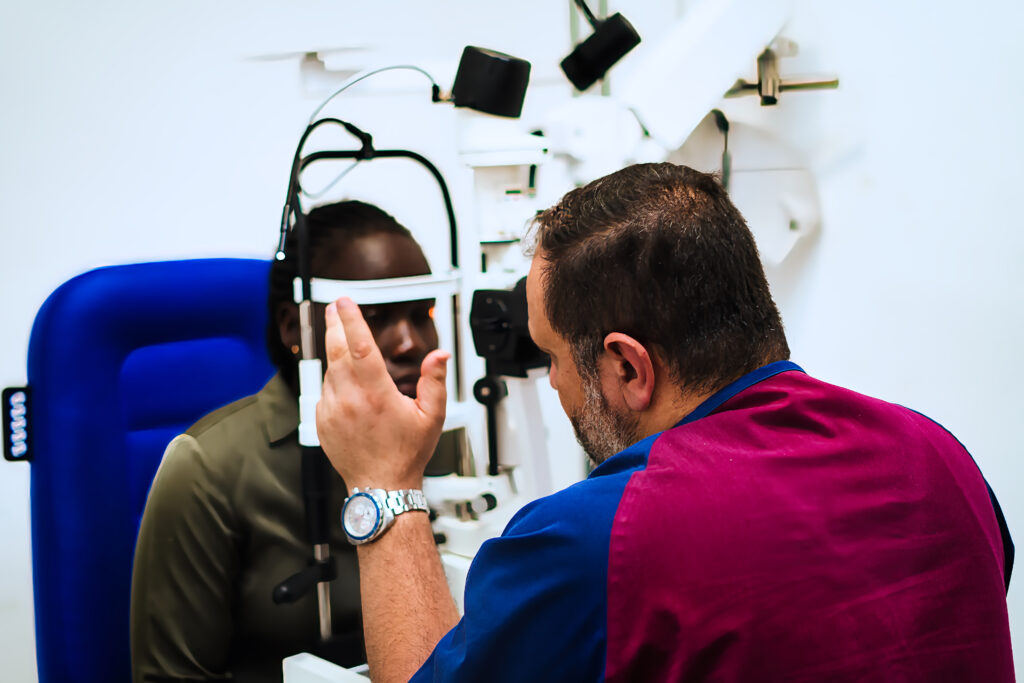
EYE SURGERY
Cornea Transplant
The cornea is the clear, dome-shaped window at the front of your eye that focuses light and gives you clear vision. When the cornea becomes diseased, damaged or scarred beyond the reach of other treatments, vision deteriorates severely and may be lost entirely. For these patients, a corneal transplant offers the possibility of restored clarity, dramatically improved vision and a return to normal life.
Corneal transplantation, medically known as keratoplasty, is the most commonly performed organ transplant in the world, with approximately 185,000 procedures performed globally every year. At Royal Eye & Ear Hospital, our specialist surgical team performs corneal transplantation with the experience, precision and post-operative care that gives patients the best possible chance of a successful outcome and meaningful visual recovery.
How It Works
Corneal Transplant involves Five precise steps:
- Anaesthesia: Corneal transplantation is performed under general anaesthesia or local anaesthesia with sedation. You are completely comfortable throughout.
- Donor tissue preparation: The donor corneal tissue is carefully prepared by the surgical team before transplantation. For lamellar procedures, the specific layer to be transplanted is carefully separated from the donor corneal button.
- Recipient bed preparation: The diseased corneal tissue is removed from the recipient eye, creating the space for the donor tissue. For PK, the entire central cornea is removed using a trephine. For lamellar procedures, only the affected layer is removed.
- Donor tissue placement: The prepared donor tissue is carefully positioned in the recipient eye. For PK, the donor button is sutured into place with fine nylon sutures. For endothelial procedures, the donor tissue is unfolded inside the eye using an air bubble technique.
- Closure: The eye is closed and checked under the microscope. You are transferred to recovery and monitored before discharge.
Procedure duration varies by type: PK typically takes 60-90 minutes, lamellar procedures 60-120 minutes. Most patients stay in hospital for one night.
Why Choose Royal Eye & Ear Hospital for Corneal Transplantation?
Corneal transplantation is the most complex and technically demanding procedure in anterior segment ophthalmology. The surgical team, the quality of donor tissue and the post-operative care provided all directly determine the outcome. Here is why patients across Nairobi trust Royal Eye & Ear Hospital for corneal transplantation.
- 🏥 Specialist Eye & Ear Focus We are a dedicated eye and ear hospital — not a general clinic. Every surgeon, every nurse, and every piece of equipment here exists solely to serve your eye health.
- 👁️ ● Highly Experienced Surgical Team: Our surgical team includes Dr. Mostafa El Rayes, Consultant Vitreoretinal Surgeon with over 700 corneal transplant procedures performed and a Fellowship in the Master of Ophthalmology. His extensive corneal surgical experience across Egypt, Yemen, Djibouti, Chad, Somalia and Kenya brings a breadth of expertise rarely found in a single surgeon.
- 📍 Conveniently Located in Nairobi Based on 3rd Parklands Avenue, we serve patients from Westlands, Parklands, Gigiri, Muthaiga, and across the greater Nairobi region.
- 💊 Full Pre & Post-Operative Care From your initial cataract assessment through to your follow-up appointments, our team guides you at every step — so you never feel alone in your care journey.
- 🔬 Quality IOL Options We offer a range of intraocular lens options to suit your vision needs and budget, including standard monofocal lenses and premium options.

Benefits of Corneal Transplantation
Rapid vision restoration
- For patients with advanced corneal disease, scarring or dystrophy, corneal transplantation may be the only treatment capable of restoring meaningful vision. No other procedure, glasses or contact lens can compensate for a severely clouded or structurally compromised cornea.
High Success Rate
- In low-risk conditions such as keratoconus and Fuchs dystrophy, corneal transplantation has a high success rate due to the immune privilege of the cornea. The success rate of penetrating keratoplasty ranges from 52% to 98.8% depending on the indication and risk factors.
Relieves Pain
- Conditions such as bullous keratopathy cause significant corneal pain from blister-like swellings on the corneal surface. Corneal transplantation addresses the underlying cause, providing lasting relief from this chronic discomfort.
Improves Quality of Life
- A corneal transplant can restore a patient to visual function, independence, work capability and quality of life that advanced corneal disease had stripped away, often for years.
Lower Risk
- Modern lamellar techniques such as DSAEK and DMEK have significantly reduced the risks associated with corneal transplantation compared to full-thickness PK, offering only a third of the rejection risk of full-thickness transplants for appropriate cases.
Preserves Future Options
Successful corneal transplantation keeps future options open, including glasses, contact lenses and in some cases additional refractive procedures to optimise post-transplant vision.
What to Expect After Corneal Transplantation
Timeline:
Days 1-7: Your eye will be sore, light-sensitive and vision will be blurred. This is expected. An eye shield protects the eye. Prescribed eye drops begin immediately. Rest at home with your eye shield in place when sleeping.
Weeks 1-4: Vision remains blurred as the eye heals. The eye may be red and occasionally watery. Continue all prescribed eye drops diligently. Frequent follow-up appointments monitor graft health and check for early rejection signs.
Months 1-6: Vision begins to improve gradually for endothelial keratoplasty (DSAEK/DMEK). For PK, vision improvement is slower and sutures remain in place. Eye drops continue throughout this period. Vision fluctuates as the cornea settles.
Months 6-12 and beyond (PK): Sutures may begin to be selectively removed once vision has stabilised. Full visual recovery after PK can take up to one year or longer. Glasses or contact lenses are prescribed once the refraction has stabilised.
vision has fully settled.
Recovery Do's and Dont's:
✅Use all prescribed eye drops exactly as directed without exception
✅Attend every follow-up appointment, even when your eye feels fine
✅Know the signs of rejection and contact us immediately if they occur
✅Protect your eye from injury at all times
❌Do not rub or press on your eye at any time after surgery
❌Do not swim or use hot tubs until your surgeon confirms it is safe
❌Do not stop eye drops without consulting your surgeon, even if your eye feels completely normal
❌Do not miss follow-up appointments, graft rejection can be silent and requires monitoring
RESULTS
What Results Can You Expect?
1
Vision Restoration
The primary goal of corneal transplantation is to restore clear vision by replacing the diseased or opaque cornea with transparent donor tissue. The degree of visual improvement depends on the underlying condition, the health of other ocular structures and the type of transplant performed.
2
High Success Rate
In low-risk conditions such as keratoconus and Fuchs dystrophy, corneal transplantation has a high success rate due to the immune privilege of the cornea. The success rate of penetrating keratoplasty ranges from 52% to 98.8% depending on the indication and associated risk factors.
3
Faster Recovery
Modern lamellar keratoplasty techniques (DSAEK, DMEK) offer significantly faster visual recovery compared to full-thickness PK. DMEK in particular is associated with excellent visual outcomes and rapid vision restoration for Fuchs dystrophy patients.
4
Glasses or Contact Lenses Still Required
Most patients will still need glasses or contact lenses after corneal transplantation to achieve their best corrected vision. Rigid gas-permeable contact lenses are often particularly helpful after PK to correct the irregular astigmatism that may remain after the transplant.
Risks & Considerations of Corneal Transplantation⚠️
Corneal transplantation is a major ocular surgical procedure with a higher risk profile than most other eye surgeries. Understanding these risks is an essential part of making an informed decision about treatment.
1
Graft Rejection
The most significant risk of corneal transplantation. The immune system recognises the donor tissue as foreign and may mount a rejection response, causing the graft to become cloudy and fail. Rejection can occur at any time, even years after a successful transplant. Modern lamellar techniques have significantly reduced rejection risk compared to full-thickness PK. Steroid eye drops reduce rejection risk and must be continued long-term as prescribed.
2
Graft Failure
- Even without active rejection, a corneal graft may fail over time as the donor endothelial cells naturally decline. Graft failure may require repeat keratoplasty.
3
Infection
- A risk with any intraocular surgery. Prescribed antibiotic eye drops significantly reduce this risk. Any sudden worsening of vision, pain or redness after transplantation requires immediate assessment.
Patient outcome note:
Your surgeon will discuss all potential risks clearly during your pre-operative consultation. Corneal transplantation is recommended when the risk of progressive vision loss from untreated corneal disease outweighs the surgical risks, and for most patients with advanced corneal disease, it represents the best and often only path to meaningful vision restoration.
Frequently Asked Questions About Corneal Transplantation
A successful corneal transplant can last for many years to decades, depending on the type of transplant, the underlying condition and whether rejection episodes occur. Regular follow-up and diligent use of prescribed eye drops are the most important factors in prolonging graft survival. Graft failure may eventually occur and require a repeat procedure in some patients.
The procedure is performed under anaesthesia so you feel nothing during surgery. After the operation, your eye will be sore and light-sensitive for several days to weeks. Prescribed pain relief and eye drops manage post-operative discomfort effectively. The eye gradually becomes more comfortable as healing progresses.
Recovery time depends on the type of transplant. Endothelial keratoplasty procedures (DSAEK, DMEK) typically allow faster visual recovery over weeks to months. Full-thickness PK has a significantly longer recovery, with final vision taking up to one year or longer to stabilise. Your surgeon will give you a realistic recovery timeline based on your specific procedure.
Most patients will still need glasses or contact lenses after corneal transplantation to achieve their best corrected vision. A final glasses prescription is only given once the corneal refraction has fully stabilised, which may take many months. Rigid gas-permeable contact lenses are often particularly useful after PK.
Our happy customers
We’ve helped thousands of patients
Here is what they say…

Codey Joyner
UrbanAcres, LLC
“My move was way less stressful than expected! Movely packed everything, stored it for a week, and moved it all to my new home just as promised!”

Eren Hill
H&H Legal Partners
“Movely provided a very professional service when we moved offices last month. They were easy to work with and moved everything on time.”
Emanuel Sadler
SavvyMarket
Best experience ever! I desperately needed a mover to help with a last minute relocation, and Movely was so helpful in making it a seamless process!”
Ready to Restore Your Vision?
Don’t let cataracts rob you of your independence. Our specialist team at Royal Eye & Ear Hospital is ready to help you see clearly again.
Royal Eye & Ear Hospital © 2026 All Rights Reserved.